
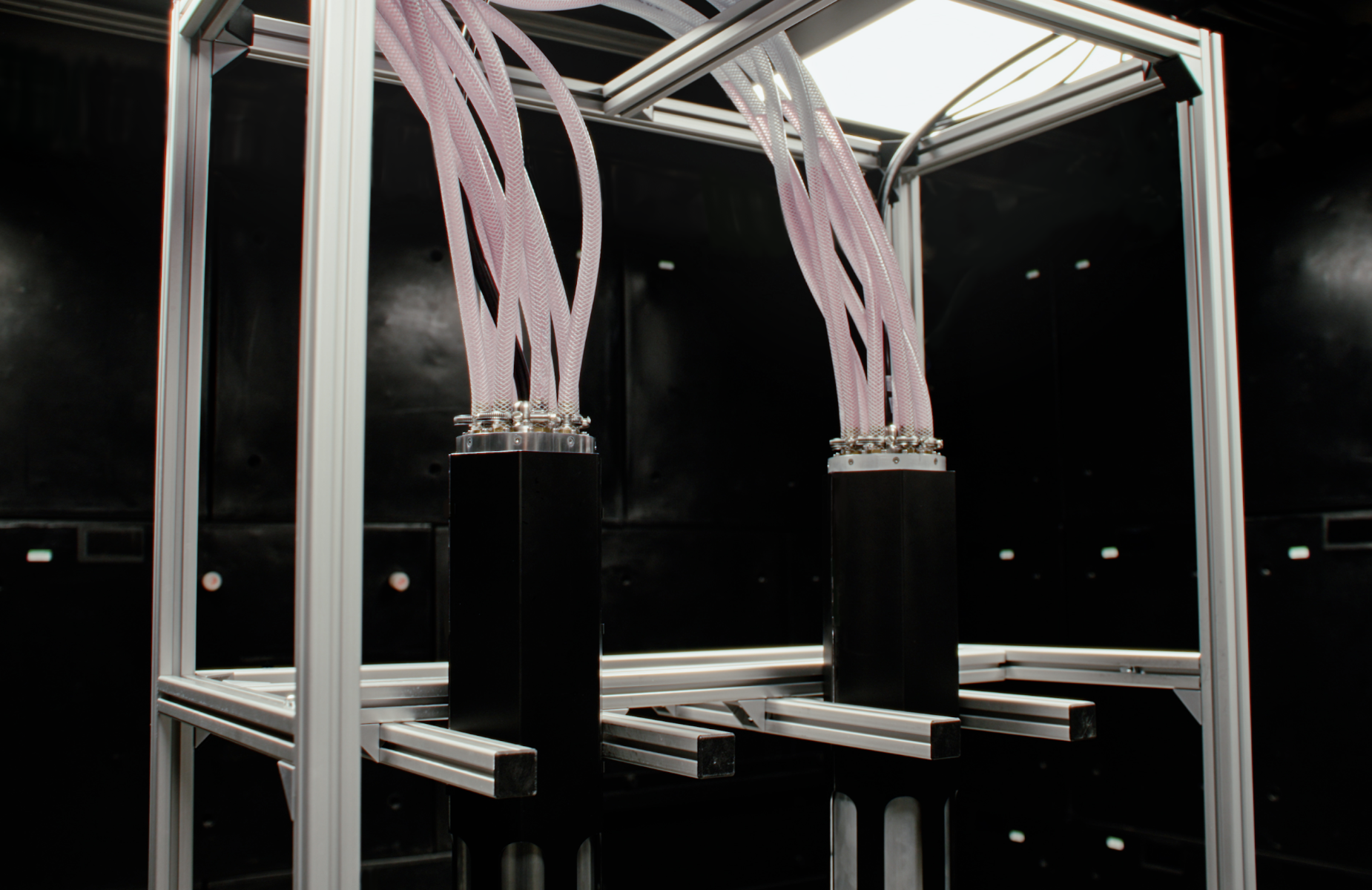
How Astral Systems is using compact fusion technology to tackle medical isotope shortages, and why daphni is backing its mission through our Blue fund.
How Can Nuclear Fusion Transform Cancer Treatment?
What if one of the biggest breakthroughs in cancer treatment came not from developing a new drug, but from rethinking how we produce the materials that make those treatments possible?
Nuclear medicine is transforming how doctors diagnose and treat cancer. But behind some of its most promising advances lies a major challenge: the global supply of medical isotopes is fragile, concentrated, and vulnerable to shortages.
These radioactive materials are essential for certain cancer imaging procedures and targeted therapies. Yet their production often depends on a limited number of ageing nuclear facilities, creating supply bottlenecks that can affect patient care.
That's the problem Astral Systems is working to solve.
Backed by daphni through our Blue fund, Astral Systems is developing compact nuclear fusion technology designed to enable a more reliable supply of medical isotopes.
And with three compact fusion devices already operating, the company is moving beyond scientific theory.
Why are medical isotopes essential for cancer diagnosis and treatment?
Medical isotopes, also known as radioisotopes, are radioactive forms of chemical elements used in nuclear medicine.
They play two important roles in cancer care.
Diagnosing cancer: Certain radioisotopes are used in medical imaging to help doctors detect tumors, assess how diseases are progressing, and monitor responses to treatment.
Treating cancer: Other radioisotopes can deliver targeted radiation to cancerous tissues, helping destroy malignant cells while limiting damage to surrounding healthy tissue.
These applications are particularly important as nuclear medicine and radiopharmaceutical therapies become increasingly sophisticated.
However, producing medical isotopes is not straightforward.
Many critical isotopes depend on specialized nuclear infrastructure, including a relatively small number of ageing production facilities.
When these facilities experience maintenance shutdowns, technical problems, or unexpected disruptions, the consequences can extend across international supply chains.
For hospitals, that can mean delayed diagnostic procedures or limited access to certain treatments.
And for patients awaiting cancer care, reliable access to medical isotopes is essential.
How can nuclear fusion help produce medical isotopes?
Nuclear fusion is the process of combining atomic nuclei under specific conditions, releasing energy and producing nuclear reactions.
Although fusion is often discussed in the context of future electricity generation, its potential applications extend beyond the energy sector.
One particularly promising use is the production of medical isotopes.
Fusion reactions can generate neutrons and other nuclear conditions that may be used to produce radioactive isotopes from suitable target materials.
Traditionally, the infrastructure needed for nuclear processes can be large, expensive, and highly specialized.
But what if fusion technology could be made compact enough to fit on a tabletop?
That's the approach Astral Systems is pursuing.
What is Astral Systems' Multi-State Fusion technology?
Astral Systems is commercializing a proprietary approach known as Multi-State Fusion (MSF).
Its technology is designed to enable fusion reactions using compact, tabletop-sized devices, creating new possibilities for medical isotope production.
Rather than focusing exclusively on large-scale fusion infrastructure, Astral is developing smaller systems that could eventually support a more flexible and resilient isotope supply chain.
The company's technology builds on research into lattice confinement fusion, an area of nuclear physics exploring how fusion reactions can occur under particular conditions within solid materials.
The ambition is to make fusion-based isotope production more accessible and commercially viable.
And Astral has already reached an important technical milestone.
Three compact fusion devices are currently operational, demonstrating that the company's approach has moved beyond an initial research concept.
This does not yet mean that Astral has solved commercial-scale isotope production. Further development and validation remain necessary.
But it represents an important step toward turning advanced nuclear physics into practical medical infrastructure.


