
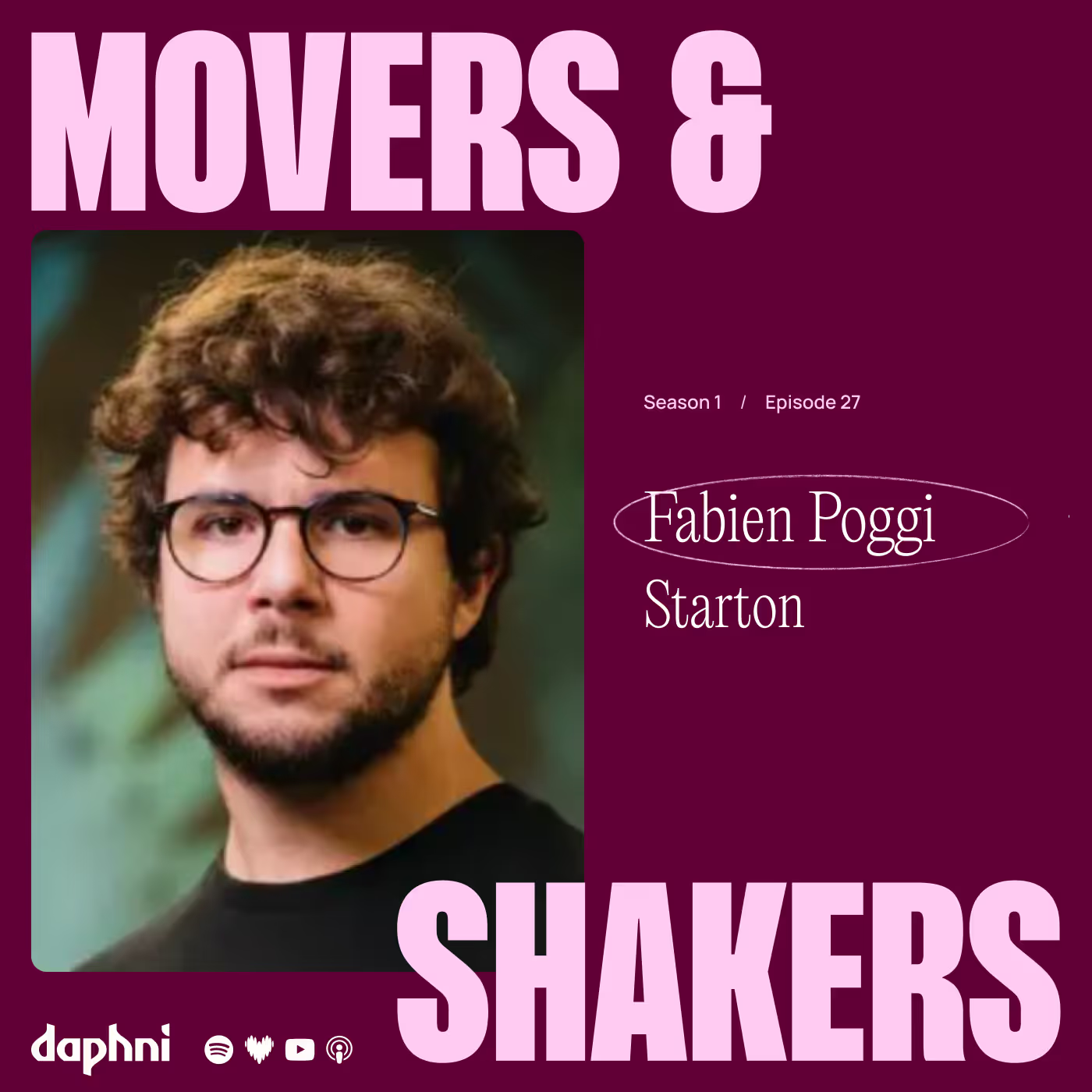
Transforming Web2 Applications into Web3, with Fabien Poggi (Starton)
How Developers Can Transition From Web2 to Web3
Developers can transition from Web2 to Web3 by using abstraction tools and infrastructure platforms that handle blockchain complexity, allowing them to build decentralized features without deep expertise in protocols or smart contracts.
Bridging the Gap Between Web2 and Web3
For many developers, Web3 feels complex and inaccessible due to new concepts like blockchains, wallets, and smart contracts.
This episode explores how the transition becomes easier when infrastructure removes technical friction and lets developers focus on product logic rather than protocol details.
Making Web3 Accessible to Mainstream Developers
We talk with Fabien Poggi, co-founder and CEO of Starton, a platform often described as “Stripe for Web3.”
Starton’s mission is simple:
enable developers to turn existing Web2 applications into Web3 applications without requiring advanced blockchain expertise.
Abstracting Blockchain Complexity
A key barrier to Web3 adoption is complexity.
Starton addresses this by:
- Abstracting blockchain interactions
- Providing APIs and developer tools
- Simplifying deployment of Web3 features
- Reducing the learning curve for traditional developers
Infrastructure replaces friction with usability.
Why Web3 Goes Beyond Cryptocurrencies
This conversation also reframes Web3 beyond crypto market cycles.
Web3 represents:
- New ownership and data models
- Open, interoperable systems
- Decentralized applications embedded into existing products
Its adoption depends less on speculation and more on developer-friendly tooling.
Mass Web3 adoption will not come from experts alone.
It will come from platforms that:
- Empower Web2 developers
- Enable gradual transitions rather than full rewrites
- Make decentralized technology invisible to end users
Developer infrastructure is the foundation of Web3’s future.
More episodes
Rethinking Cancer Treatment with Nuclear Fusion, with Tom Wallace-Smith (Astral Systems)
Bringing Solar Power Down From Space, with Jasper Deprez (TerraSpark)

Breaking the Cycle of Social Inequality, with Florence Massenot (Télémaque)

The Founder Community Changing Europe with Cristian Pinto (pluto)

The Power of Connection with Michel Jusforges (Autremonde)
Rethinking Startup Boards with Solènne Niedercorn (Finscale)

Reinventing franchising with Anton Soulier (Alpa)

Industrial Costs with Mickael Mamou (Relief)

Media as a Catalyst for Climate Innovation with Hugo Rauch (New Wave)