
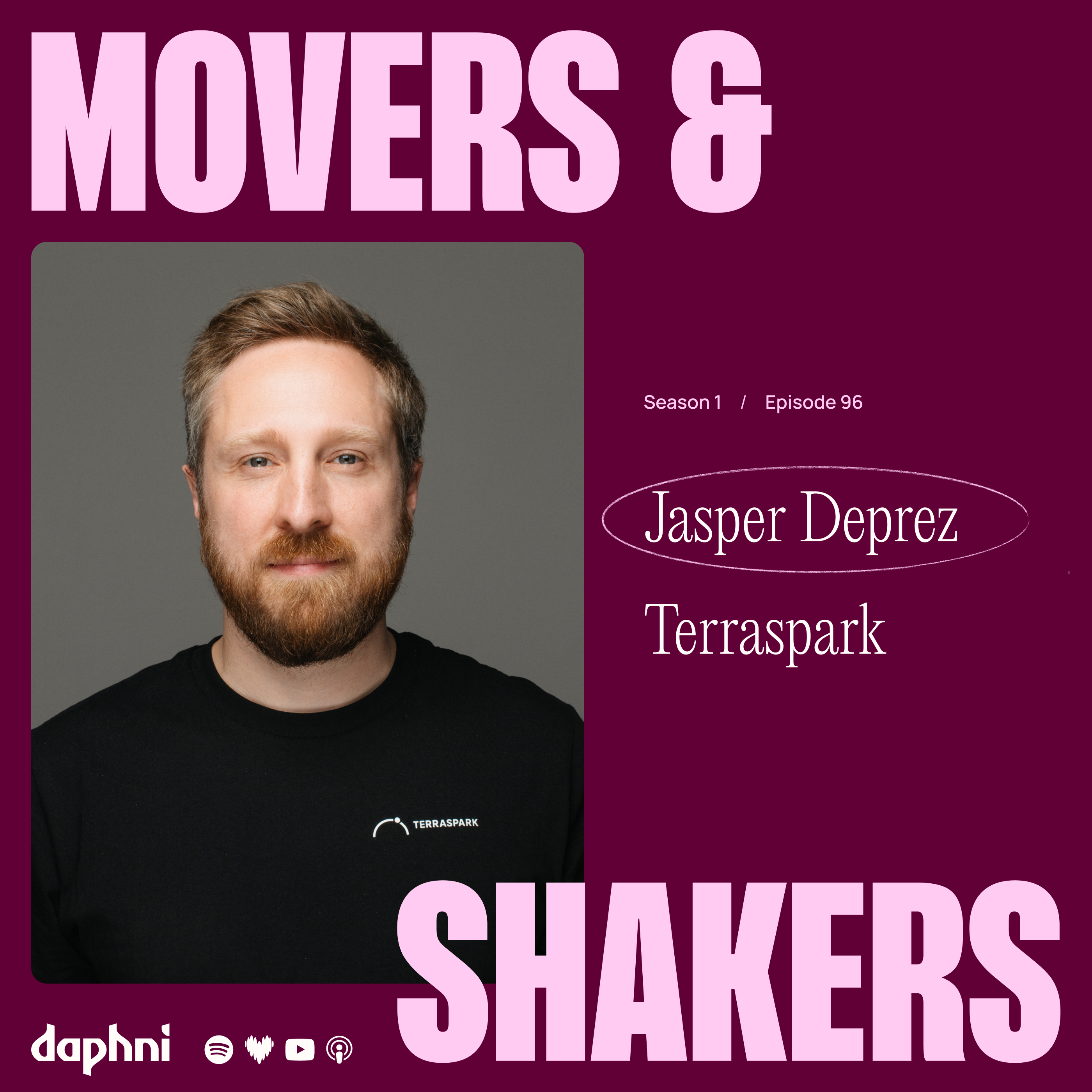
Bringing Solar Power Down From Space, with Jasper Deprez (TerraSpark)
Could Space-Based Solar Power Solve the World’s Energy Problem? With Jasper Deprez of TerraSpark
Space-based solar power could help solve the global energy problem by capturing continuous solar energy in space and transmitting it to Earth wherever and whenever electricity is needed.
What is space-based solar power?
Space-based solar power involves capturing solar energy using infrastructure in space and transmitting that energy back to Earth.
The concept has existed since the 1970s, but historically, the economics made it extremely difficult to commercialize. Today, several underlying conditions have changed: launch costs have fallen, satellites have become cheaper to build, and solar technology has improved.
For Jasper Deprez, co-founder of TerraSpark, these shifts create an opportunity to revisit an old idea with a new approach.
Why could solar power be more effective in space?
Solar energy on Earth has two fundamental limitations: it is intermittent and dependent on local conditions.
Solar panels cannot generate electricity at night, and their output varies depending on weather and location. In space, solar infrastructure can access sunlight far more consistently.
TerraSpark’s vision is to capture that energy in space and transmit it back to Earth, making solar power available where and when it is needed.
How is TerraSpark approaching space-based solar power?
Instead of beginning with a massive infrastructure project requiring decades and tens of billions in investment, TerraSpark is taking a startup approach.
The company is looking for the smallest commercially viable, scalable and investable steps it can take first.
That means initially targeting markets where energy is already expensive or difficult to access, including off-grid locations and islands, before expanding toward much larger energy markets.
As Jasper describes the strategy: build “one orbit at a time.”
More episodes

Breaking the Cycle of Social Inequality, with Florence Massenot (Télémaque)

The Founder Community Changing Europe with Cristian Pinto (pluto)

The Power of Connection with Michel Jusforges (Autremonde)
Rethinking Startup Boards with Solènne Niedercorn (Finscale)

Reinventing franchising with Anton Soulier (Alpa)
Industrial Costs with Mickael Mamou (Relief)

Media as a Catalyst for Climate Innovation with Hugo Rauch (New Wave)

Embracing a Build-first Mindset with Nicolas Mazurier (Aywen, YouTuber)

Reinventing Search Media, with Yohan & Sacha (K-words)